The rapid development of artificial intelligence represents a major transformation, affecting economies, public services, and everyday life. Yet AI’s current trajectory faces significant economic, environmental, and accessibility challenges. Developing resilient, sustainable, and efficient AI systems is essential to ensure that AI benefits all people while remaining aligned with environmental and development goals.
Model compression is one important pathway toward more resilient AI. By reducing model size and complexity in a strategic way, compression techniques can enable more energy-efficient systems while maintaining strong performance. This makes AI more deployable in real-world settings, especially where computing resources are limited.
Resilient AI is also inclusive AI. When models require enormous computational resources, participation becomes limited to a small number of actors. By contrast, efficient and purpose-built systems expand access to innovation, enabling researchers, public institutions, start-ups, and communities worldwide to develop and deploy AI solutions. Smarter AI is not necessarily the biggest model. It is the one that delivers meaningful results while remaining accessible, adaptable, and sustainable.
COMPETITION OVERVIEW
The governments of France and India, UNESCO, and the Sustainable AI Coalition are launching the Resilient AI Challenge, a key outcome of the Resilience, Innovation & Efficiency working group of the India AI Impact Summit. The Challenge is an open international competition aimed at engaging researchers, companies, and technology innovators from around the world.
The Challenge focuses on advancing practical solutions for AI model compression. Participants are invited to develop compressed versions of selected open-source or open-weight AI base models, aiming to achieve the best balance between model accuracy and energy gains.
Many AI models are now open source. However, organizations and researchers with limited computing resources often struggle to deploy them. Making models more efficient through compression can broaden access to AI while reducing its environmental footprint.
This initiative builds on the UNESCO and UCL publication “Smarter, Smaller Stronger, Resource Efficient AI and the Future of Digital Transformation” published in July 2025. The report demonstrates that relatively small design choices in how models are built and used can significantly reduce energy consumption without compromising performance. Model compression is one of the key approaches explored.
The Challenge is open to the research community, companies, start-ups, and innovators who aim to advance the field of model efficiency.
Teams may compete in one or more of the following categories. Each category is based on a specific AI model selected in collaboration with technology partners:
- Audio-to-text using Voxtral Realtime by Mistral AI
- Image-to-text using Gemma 4 by Google
- Text-to-text using Sarvam-30b by Sarvam
Each category focuses on a distinct real-world use case and model type to explore different compression techniques.
The winner of each category will be the team that delivers the most energy-efficient compressed version of the baseline model while meeting a defined threshold for accuracy.
TIMELINE
- This challenge was officially launched at the AI Impact Summit in India on February 20, 2026.
- Team registration was open from February 20 to April 12, 2026
- The competition runned from March 23 to June 15, 2026.
- Technical leads from Mistral AI, Google, and Sarvam have presented the selected base models and outline technical specifications during three kick-off meetings. Text-to-text: March 23, 2026 / Audio-to-text: March 25, 2026 / Image-to-text: April 27, 2026
- A mid-challenge online Q and A session has been organized with model providers.
- Assessment will be conduced through 2 rounds:
- Round 1 : Intermediate compressed models have been evaluated between April 27 and May 20, 2026 with intermediate leaderboarder published
- Round 2: Final compressed models submitted by June 15, 2026.
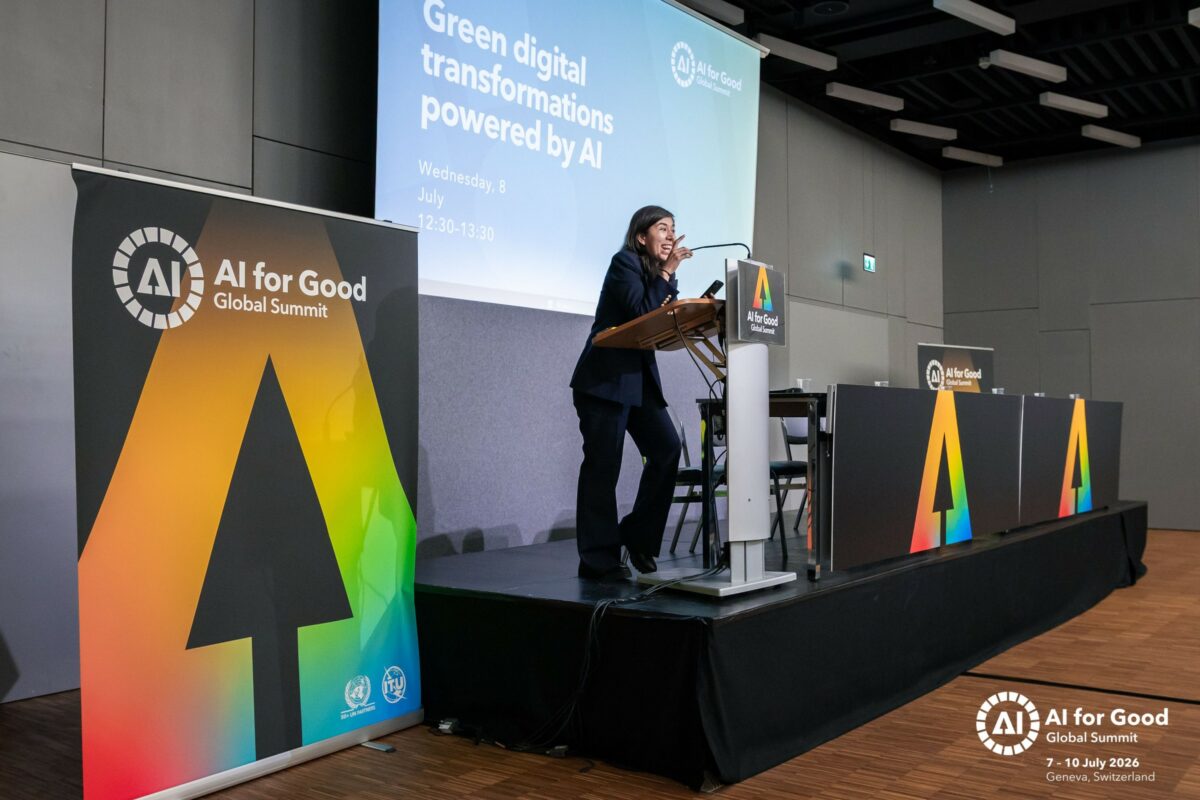
- The winners reveal ceremony was held at ITU’s annual AI for Good Summit in Geneva, Switzerland, on July 8, 2026, 12:30am-1:00pm | Palexpo, Room V.
WHY PARTICIPATE IN THE CHALLENGE
By participating in this international competition focused on AI model efficiency, you contribute to shaping a more accessible and sustainable future for artificial intelligence. The Challenge will introduce a common threshold for accuracy, and will rank the models based on energy gains, helping to establish new mindsets for resilient AI. Participants will gain visibility within the global AI community and contribute to practical, real-world solutions aligned with environmental and development objectives.
Prizes:
Winning teams receive:
- International recognition through UNESCO, AI for Good Summit and the Sustainable AI Coalition
- Opportunities to present their work to the global AI community
- Direct engagement with participating AI models providers and technical teams
- Coaching hours with Capgemini Invent Team and Pruna AI
- Premium access to compute capacity on the AIKosh platform
- Additional prizes to be announced specific to each category
HOW TO TAKE PART
Who can participate ?
The Challenge is open to:
- Researchers from universities, or research institutions
- Companies and start-ups
- Professionals working in the private or public sector
- Non-profit organizations
- Students enrolled in universities or research programs
Participants may compete in one or multiple category.
Challenges will be organized into 3 categories, to reflect various use-cases. The three categories are :
- Audio-to-text using Voxtral Realtime by Mistral AI
- Image-to-text using Gemma 4 by Google
- Text-to-text using Sarvam 30b by Sarvam AI
HOW THE SOLUTIONS WILL BE EVALUATED
Submissions will be evaluated by the technical team of Challenge Organizers, which will assess both the accuracy and energy gains of the compressed models. To guarantee fairness, the energy consumption of inferences will be measured under uniform conditions, using identical hardware for all evaluations.
PLEASE REFER TO OUR FAQ FOR TECHNICAL QUESTIONS RELATED TO ASSESSMENT : HERE
Winners Award Ceremony | AI for Good Summit |July 8, 2026
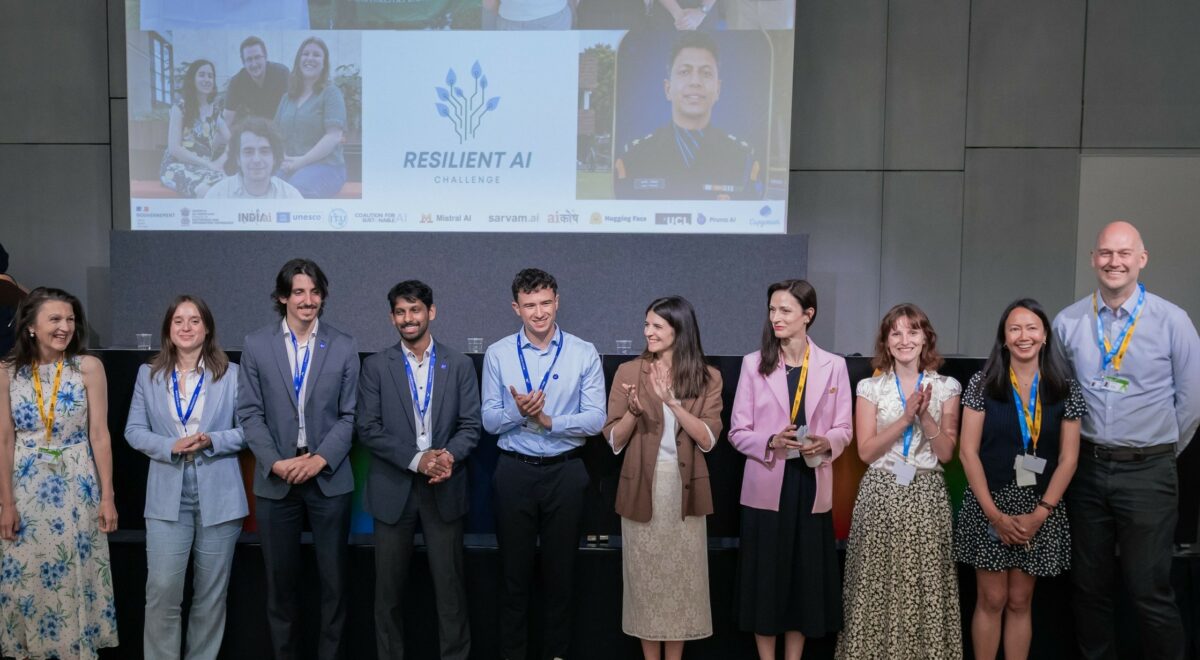
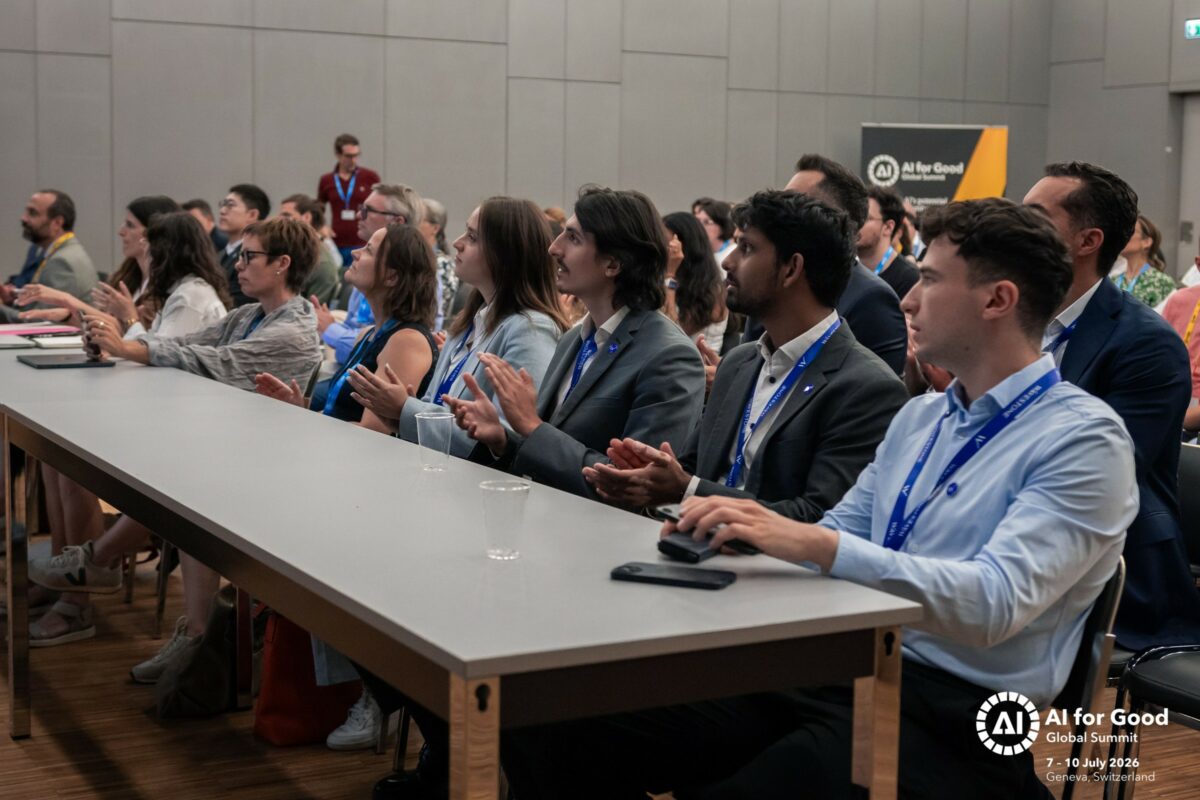
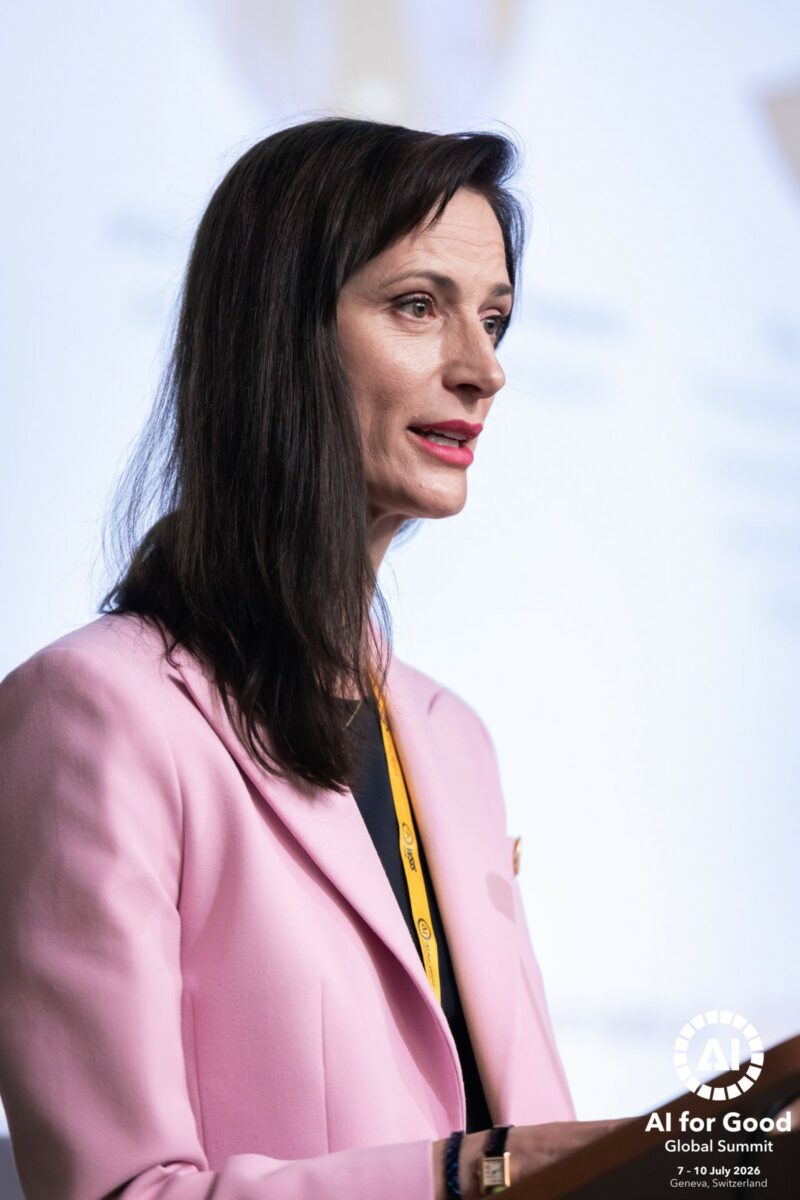
During the AI for Good Summit in Geneva, we announced the winners of the Resilient AI Challenge, recognising innovative teams that demonstrated how AI models can be made significantly more energy-efficient without compromising performance.
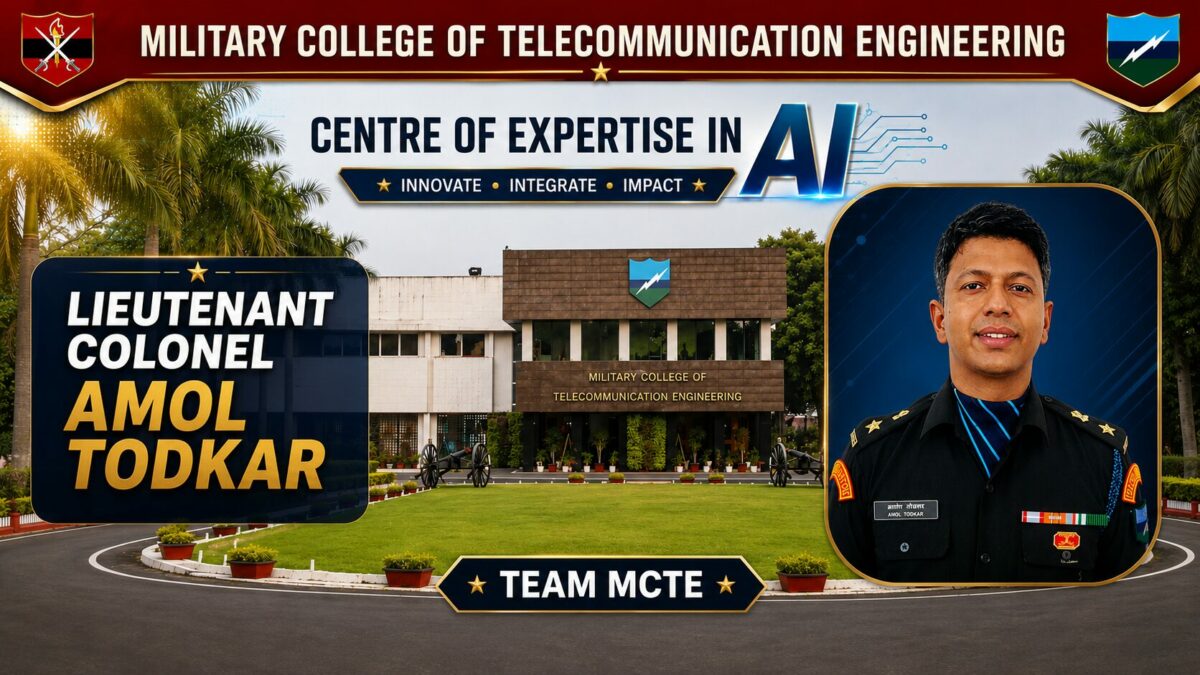
🏆 AUDIO-TO-TEXT CATEGORY | MCTE Team, from the Military College of Telecommunication Engineering (India)
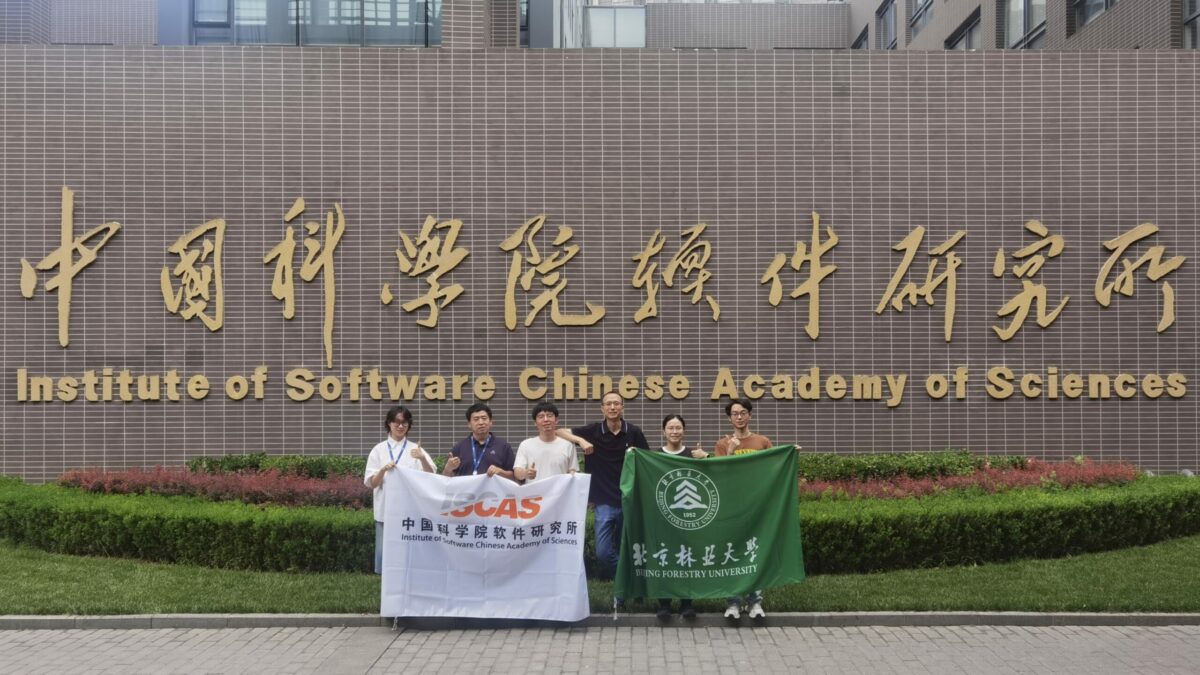
🏆 IMAGE-TO-TEXT CATEGORY | Team LiteMind from the Institute of Software, Chinese Academy of Sciences and the Beijing Forestry University (China)
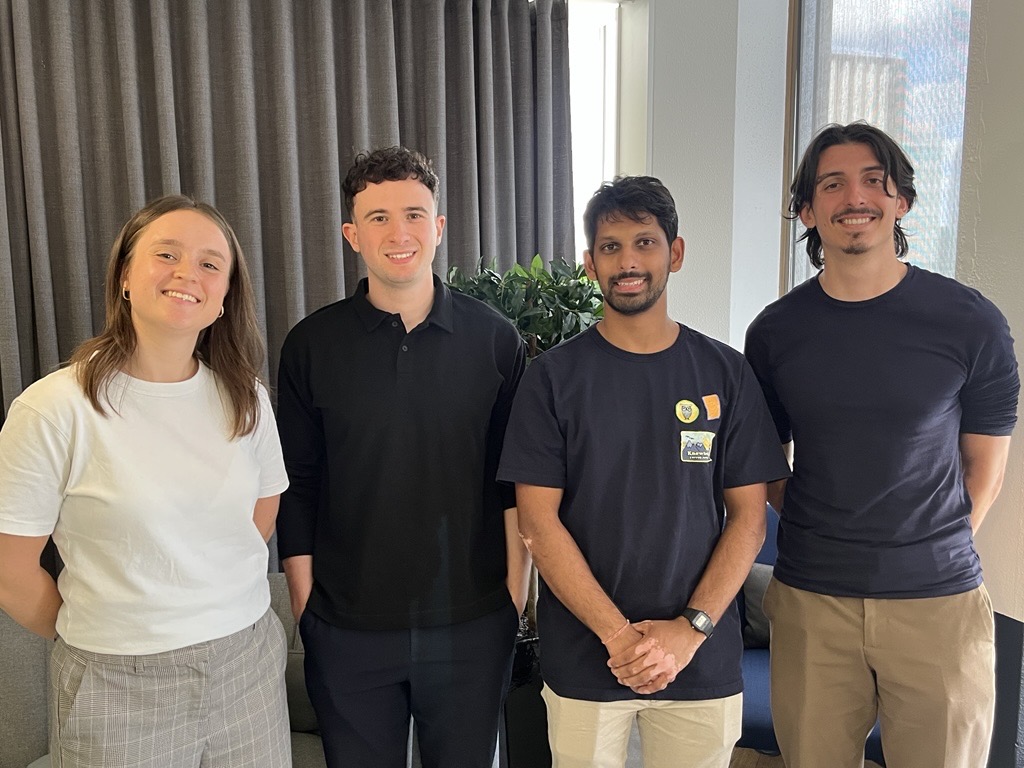
🏆 TEXT-TO-TEXT CATEGORY | The Wavestone Wavelets from Wavestone (France)
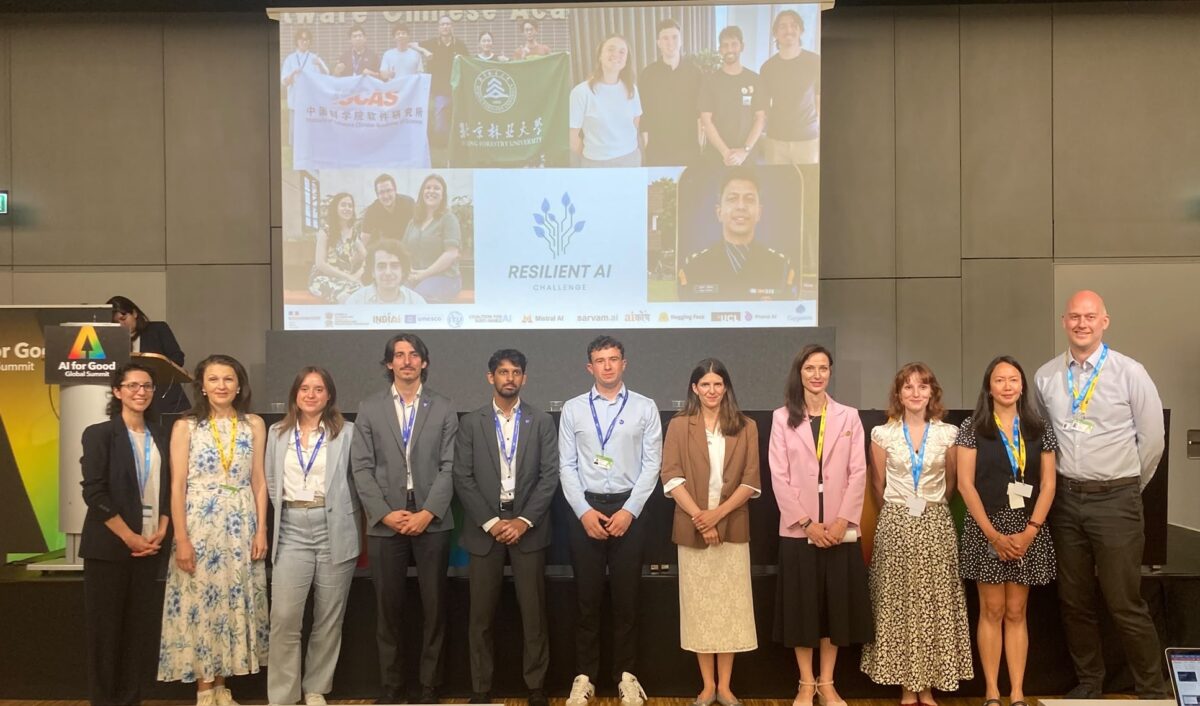
More pictures of the ceremony…
You want to know more about the winning teams? Discover the three last episodes of our mini-series dedicated to them! You will learn more about their strategies throughout the competion, the challenges they have faced, and how they resolved them to achieve the top place in their categories.
MAKE AI GREENER – A mini-series on model compression
We are launching#MakeAIgreener, a mini-series from the Resilient AI Challenge exploring AI model compression. Discover how rethinking the design and use of AI models can dramatically reduce their energy consumption without compromising performance. Episodes will be released on a regular basis until the winners announcement in July.
Energy consumption of AI : where are we headed? What is AI model compression? When and why should we use compressed models? Can model compression truly reduce AI systems’ energy use? What compression techniques already exist? Where does research stand today in the field?
Check out the first episode of #MakeAIgreener now to learn more about AI and its energy use and don’t forget to check the LinkedIn of the Coalition for a Sustainable AI to catch the next episodes!
Discover the first episode of our mini-series #MakeAIgreener now: “Artificial Intelligence and Energy Use: What’s at Stake?“, a video created and produced by UNESCO
Dive deeper into compression of AI systems by watching the second episode of our mini-series #MakeAIgreener now: “Making AI Greener with Compression“, a video created by Professor Ivana Drobnjak O’Brien, Department of Computer Science, UCL
Want to understand what is compression of AI systems and what techniques can be used to compress AI models? Watch the third episode of our mini-series #MakeAIgreener now: “How to compress AI models?“, a video created by Bertrand Charpentier, Founder, President and Chief Scientist at Pruna AI
You want to start compression and you’re looking for guidance and tools? Watch the fourth episode of our mini-series #MakeAIgreener now: “Model compression, what guidance do you need to start as a developer?“, a video created by Bertrand Charpentier, Founder, President and Chief Scientist at Pruna AI
In the 5th episode discover the experts team of the french Center of Expertise for Digital Platform Regulation – Pôle d’Expertise de la Régulation Numérique (PEReN) which is leading the evaluation process of the Challenge for a YES/NO interview about model compression! A good way to learn more on compression in a simple way, with Nicolas Rolin and Benoît Marion, datascientists at PEReN.
Discover the winning team of the image-to-text category in this new episode of our mini-series #MakeAIgreener: “MCTE” Team! Represented by the lieutenant-colonel Amol Todkar from the Military College of Telecommunication Engineering (India). He explains how he achieved the top place in his category and what was the challenges faced during the competition.
Learn more about model compression by watching the different episodes released on our page!
Discover the winning team of the image-to-text category in this new episode of our mini-series #MakeAIgreener: “LiteMind” Team! Represented by Peng Wang, Guangli Ren, Jing Sun, Ming Wang, Han Wang, Jialei Yu, Zhicheng Shao, and Guangyu Qi the Institute of Software, Chinese Academy of Sciences and the Beijing Forestry University (China). They explain how they achieved the top place in their category and what was the challenges faced during the competition.
Learn more about model compression by watching the different episodes released on our page!
Discover the winning team of the image-to-text category in this new episode of our mini-series #MakeAIgreener: “Wavestone Wavelets” Team! by Hemendra Utchanah, Rose Delas, Yacine Cadi-Boureghda, Corentin Peron, Alphonse Meltz, Aubin Arrouet-Le Brignonen, Cyril Baechler from Wavestone (France). They explain how they achieved the top place in their category and what was the challenges faced during the competition.
Learn more about model compression by watching the different episodes released on our page!
ORGANIZED BY
WITH THE SUPPORT OF
CONTACT US